
retro tales
1 Month Timeline
Date
Angellee Martinez, Sidra Chaudhry
Team
Ux/Ui, Research, Sketches, User Flow, Empathy Maps, Personas, Sound Board, Story Boarding, Prototyping, User Testing, etc.
Project Responsibilities
A multi-sensory storybook experience that helps children navigate stories through sound, touch, and movement—making imaginative play more accessible, immersive, and inclusive.
Solution
It blends audio cues, vibrating speakers, and morphing texture tiles to guide children through interactive story moments step by step.
What it does
Children who are blind understand the world through their senses—this experience transforms storytelling into something they can hear, feel, and act out, making the narrative intuitive even without visuals.
Why it matters
Final Prototype
Key Features
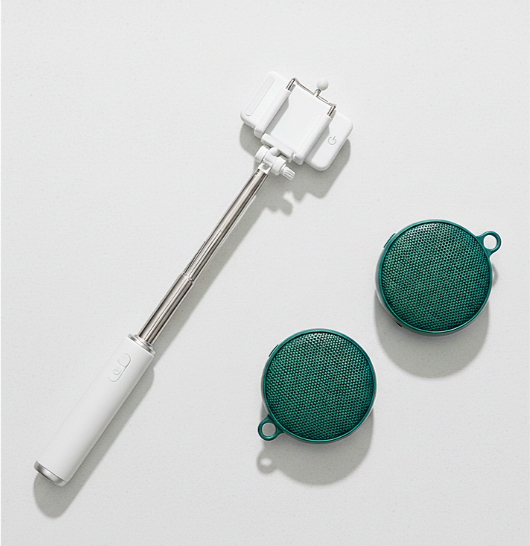
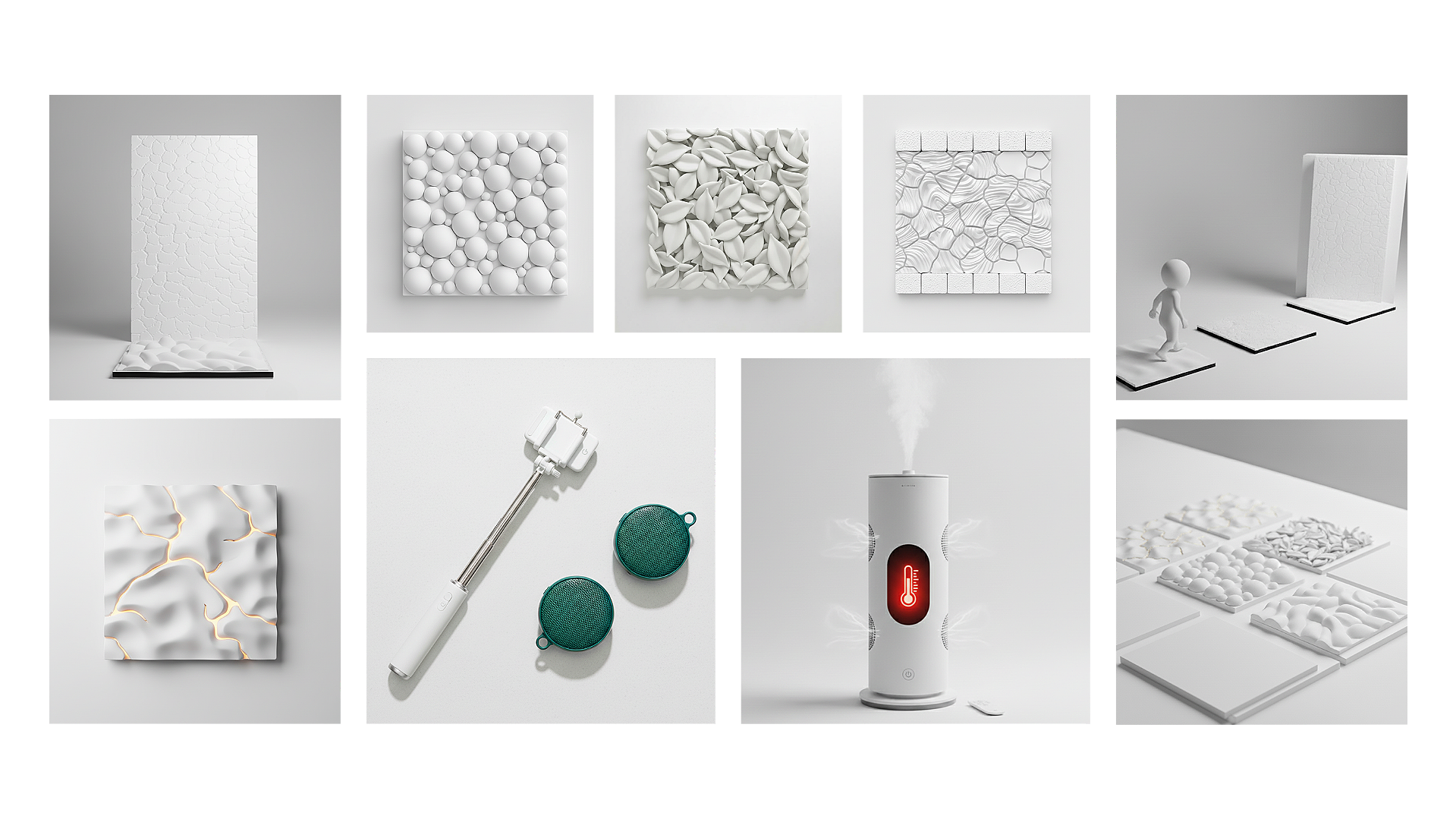
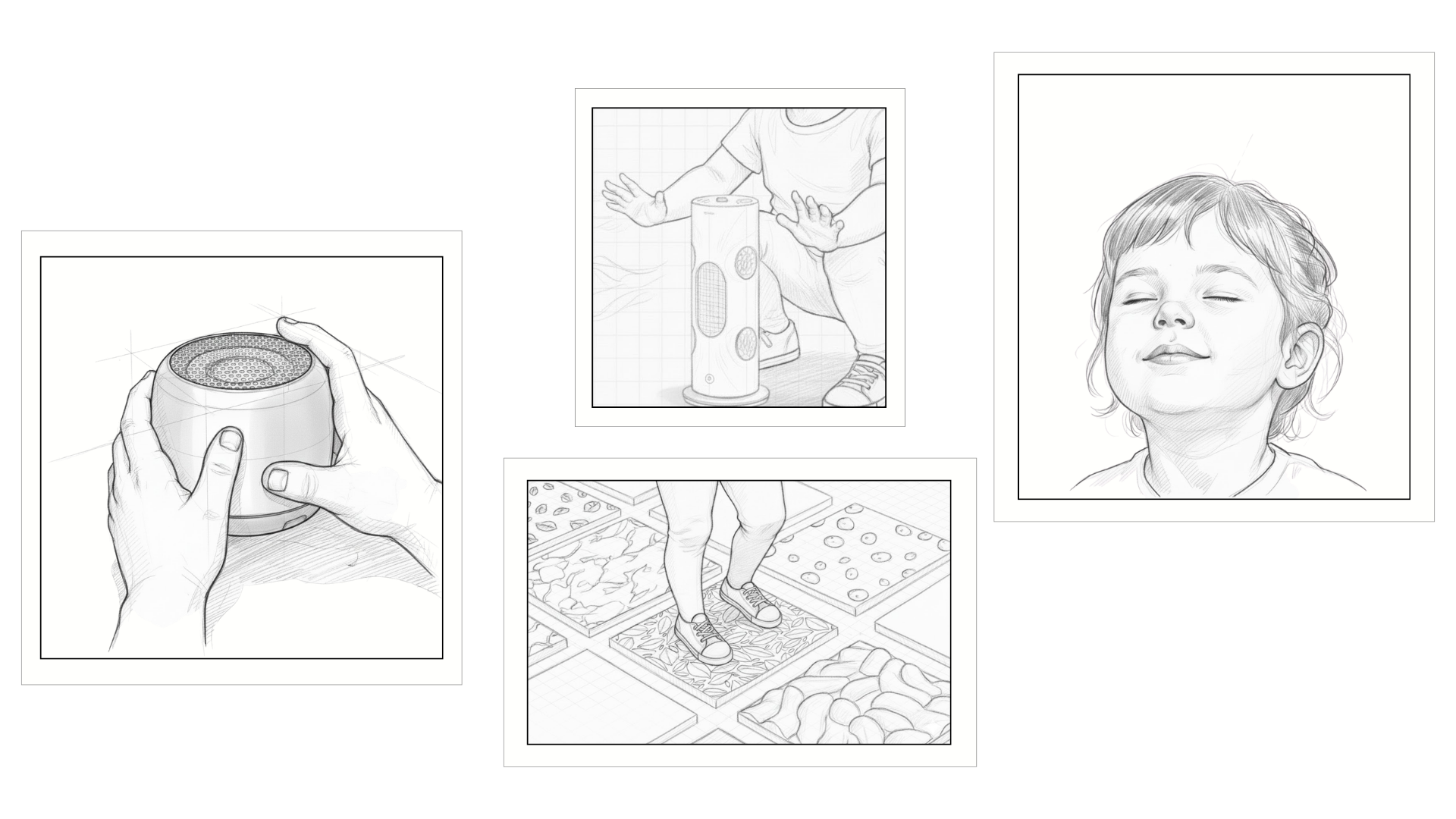
Speakers are placed in the environment and on a handheld device for caretakers, allowing users to hear the experience from all around them. The sound also enhanced the textures of the objects they interacted with.
Spatial Speakers &
Handheld Speaker
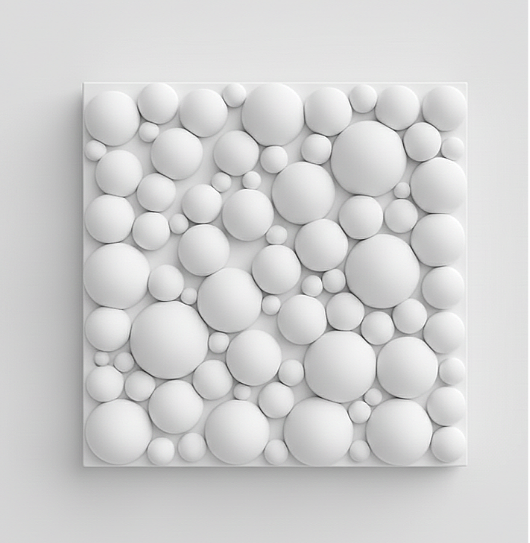
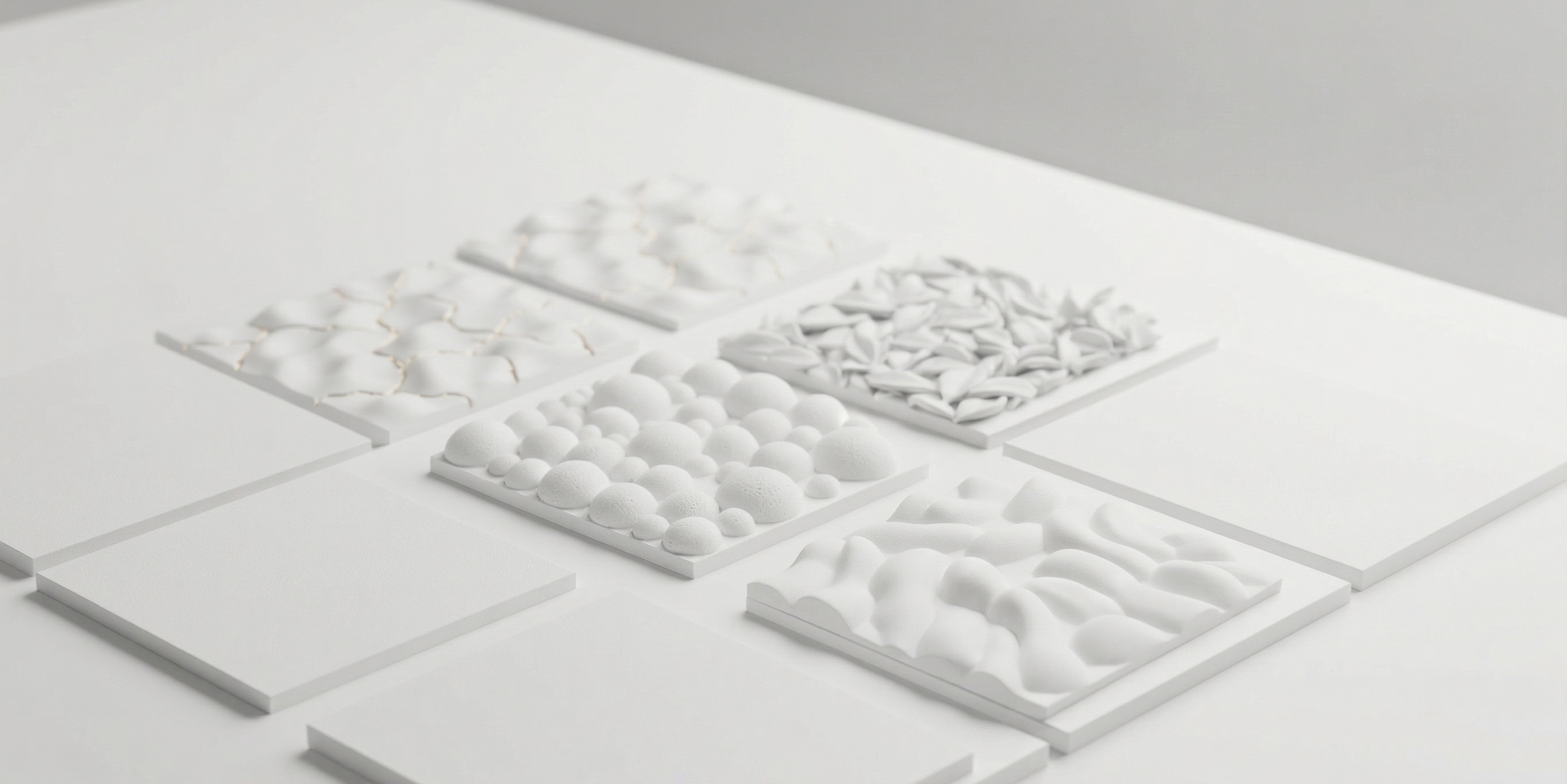
Tactile tiles morph into different textures, temperatures, and shapes depending on the scene of the story. These tiles would allow for a single layout to adapt to any story the child chooses, making the experience customizable and easy to replay.
Morphing Tiles
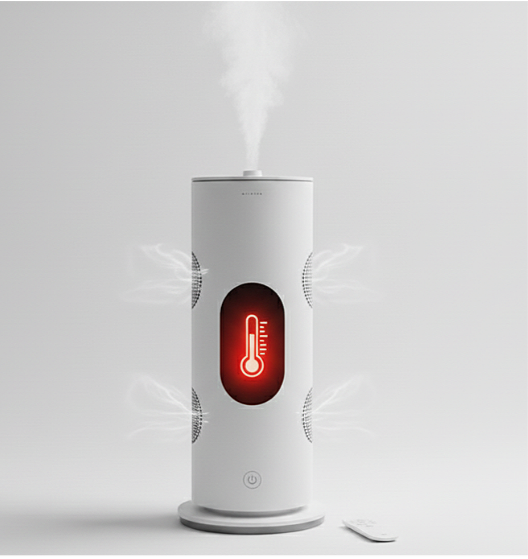
Includes a heater, cooler, fine mist sprayer, etc. This device would automatically adjust to match the story’s atmosphere, reinforcing the story narrative.
Environmental
Immersion Device
Interaction Points
How it works
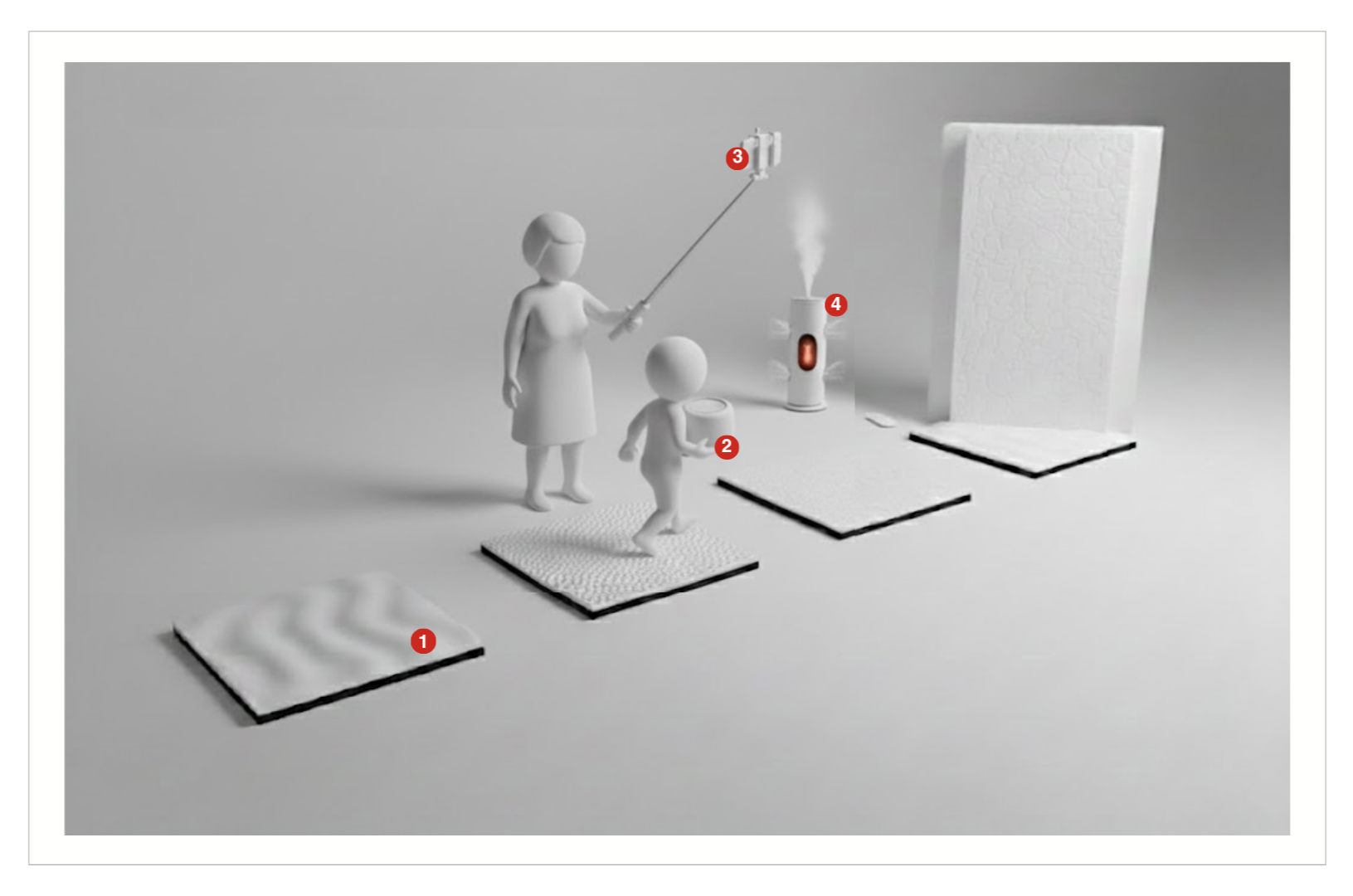
Morphing TilesTactile morphing tiles
Handheld speaker with vibrational feedback
Spatial Audio speaker
Environmental Immersion Device
Early Ideas & Concepts
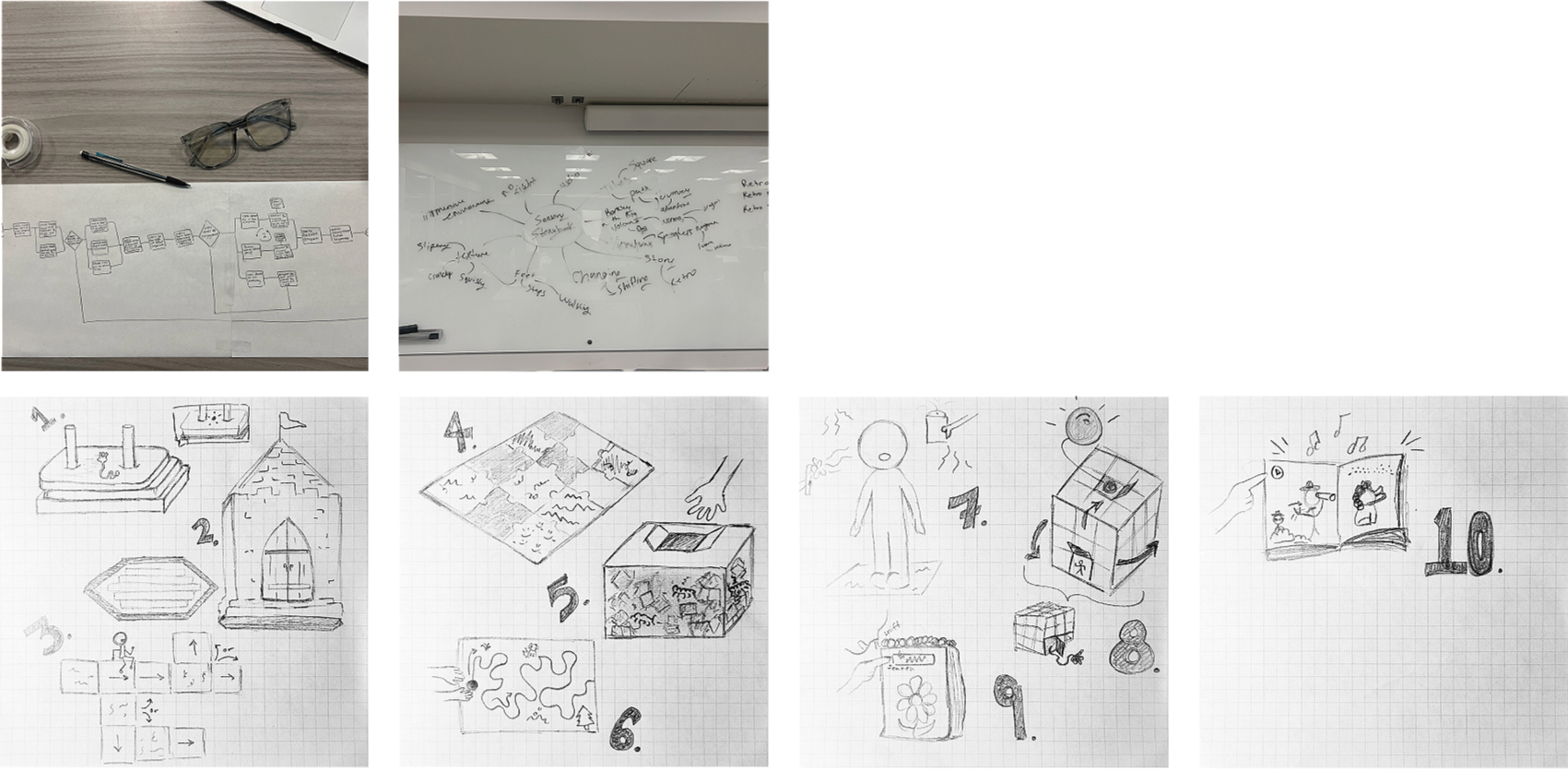
Ideation process
Through our ideation phase, we kept encountering the same issue: our designs were too simple. After exploring many iterations, we realized that our ideas needed to go beyond simplicity and instead focus on sensory experiences that would be the most memorable.
First we identified which sensory experiences were the most impactful in creating memorable moments
We went through each idea eliminating elements that were redundant or that conflicted with the experience
After several ideas, we narrowed down the key element that were the most impactful and introduced them one by one into the final environment
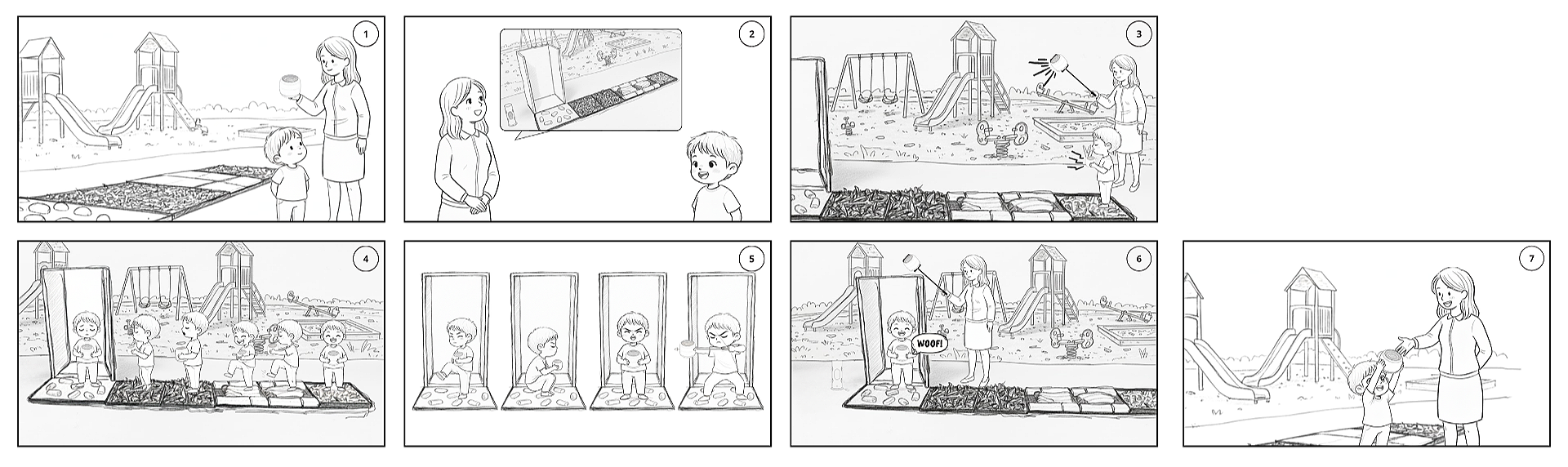
Storyboards
Unconventional Prototyping
Since these children navigate experience through memories, our biggest goal was to find textures and sounds that would be recognizable and unforgettable.
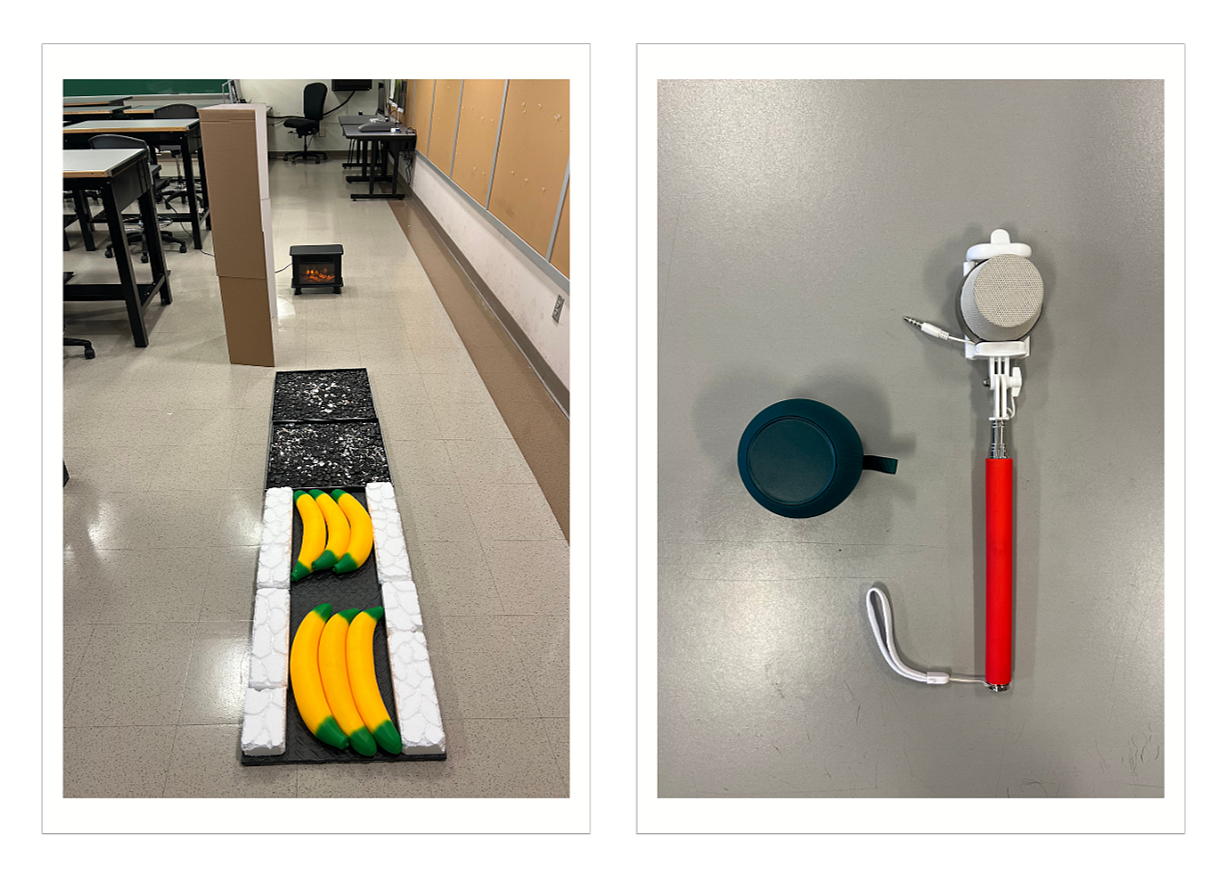
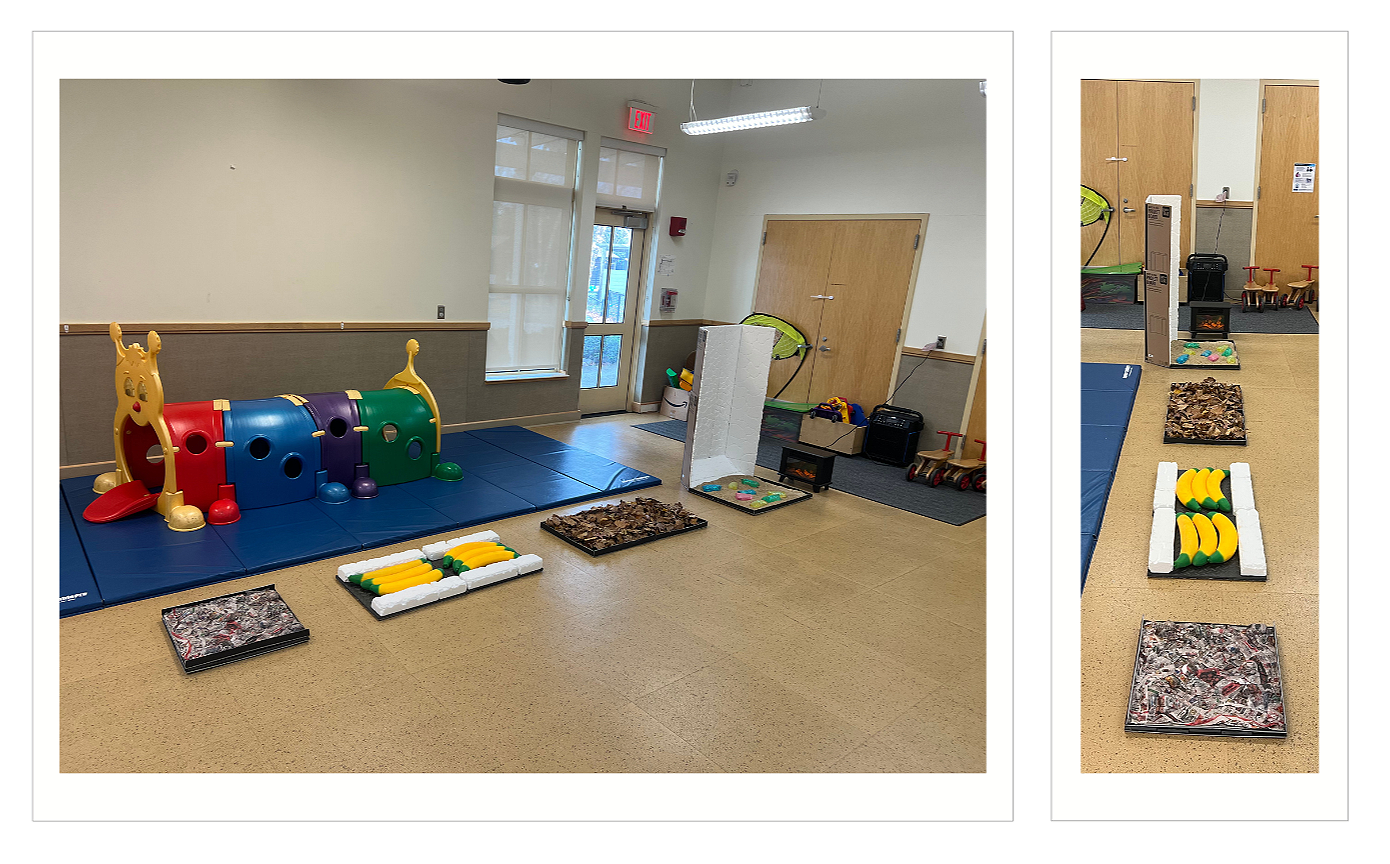
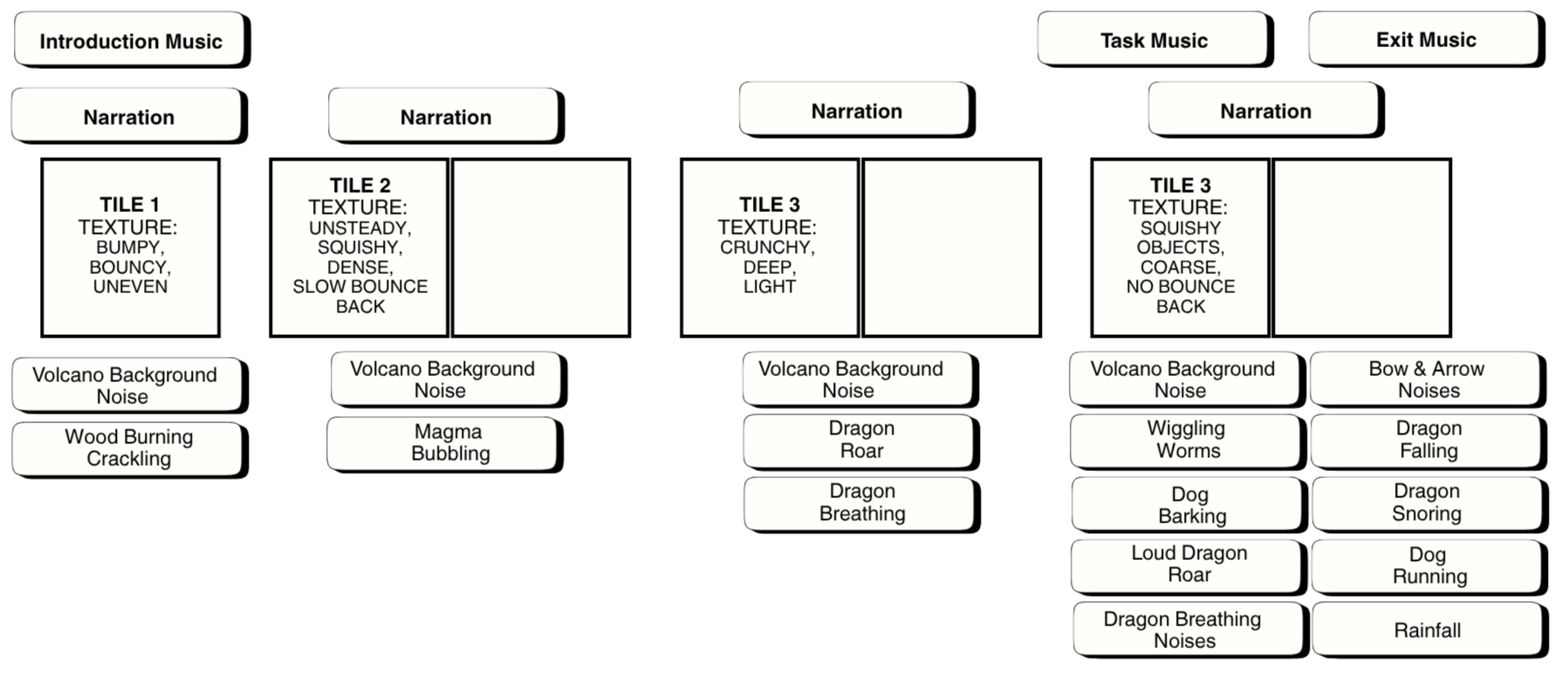
Soundboard
Sound was a key part in creating the atmosphere while also supplying context for the children. For our story Barkley and the Big Volcano, we produced a comprehensive soundboard that consolidates all narration audio, environmental effects, and haptic feedback elements.
The Problem
-
Children who are blind often don’t get the same immersive storytelling experiences as sighted children. Most existing books only offer audio or simple tactile images with Braille, which limits the sensory cues they can access. Without richer textures, vibrations, movement, and guided gestures, blind children miss out on important elements that support understanding, imagination, and emotional connection to a story.
-
The traditional story experience doesn’t translate well for people who are born blind. The elements that create connection and meaning for them are not aligned with sighted experiences, which are still the basis for most story formats today. This gap creates a disconnect, making many so-called “engaging” story experiences feel lackluster because they fail to incorporate the elements that actually matter in a blind user’s world.
-
Current options for blind children offer limited immersion, which is why we set out to create a more engaging story experience. U-Bot, a concept robot, uses sensors, sound, and movement to teach spatial awareness, but it remains a prototype and lacks a real story experience. NLS recording devices are accessible and easy to use, yet they are outdated and not immersive. Sound-board books provide basic audio interaction but rely heavily on visual cues, making them more suitable for sighted children than blind users.
Research Insights
-
Touch is strongly associated with blind experiences
Weight, Defining Textures, Size are all key things that build memories, context, and nuance
Smell, Taste, Temperature are all important elements that influence the experiences they had
Personal Connections with people (characters) are what make many traditionally sighted experiences memorable to blind users
Auditory experiences can be a good break from reading Braille but they leave a lot of room for noise to interrupt experiences
-
Utilizing other senses is key in building an engaging atmosphere
Distinguishing tactile experience are important for memorability and context building
Inclusive emotional connection is helpful in keeping users invested
-
Touch is how they navigate the world but not everything can be held in users hands – some things are just too big
While defining textures can be helpful in making something recognizable – similar textures can easily be forgotten or confused
Informational Overload and Underwhelming experiences are often to occure if engagement or environment is not balanced
-
In one video, Lily Grace demonstrates a tactile storybook made entirely of textures, which highlights the limitations of purely tactile formats (“Lily Grace Video”). In another case, Freddy explains that audiobooks help him feel included because Braille reading can be exhausting and time consuming (“Freddy Video”).
-
Personal accounts from blind individuals describe how stereotypes and a lack of understanding from sighted people contribute to exclusion. Blind individuals are not inherently limited; they simply interact with the world differently (“My Experience as a Blind Child”).
Who do we design for?
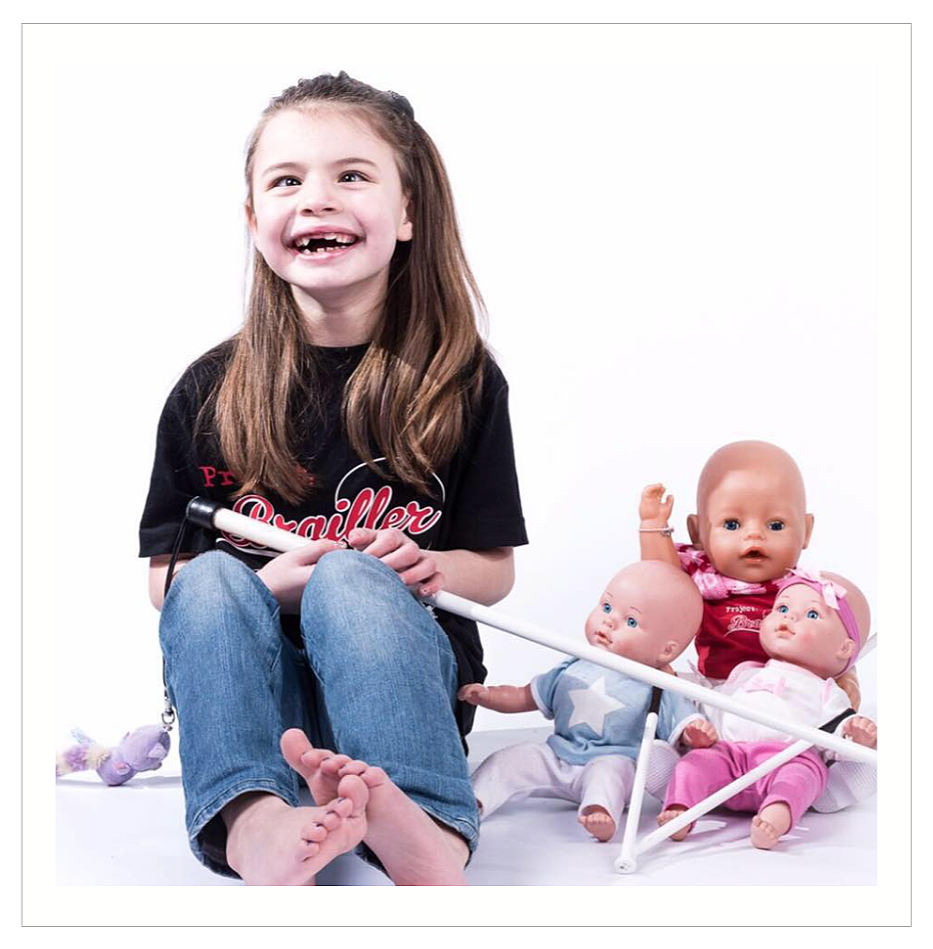
“I love it because, because I can do math and English so I don’t have to do any boring stuff like watching my mom and dads favorite tv shows”

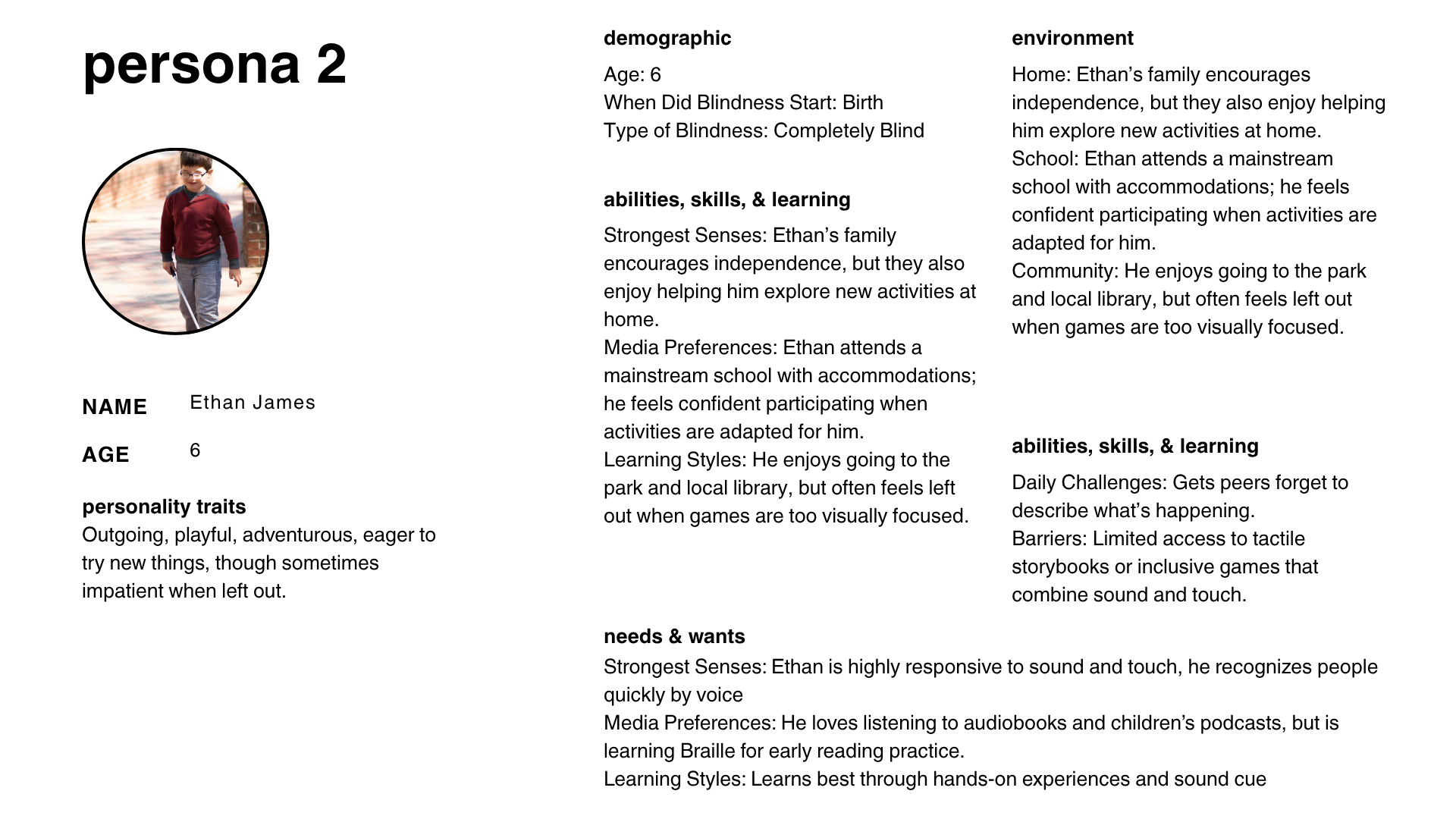
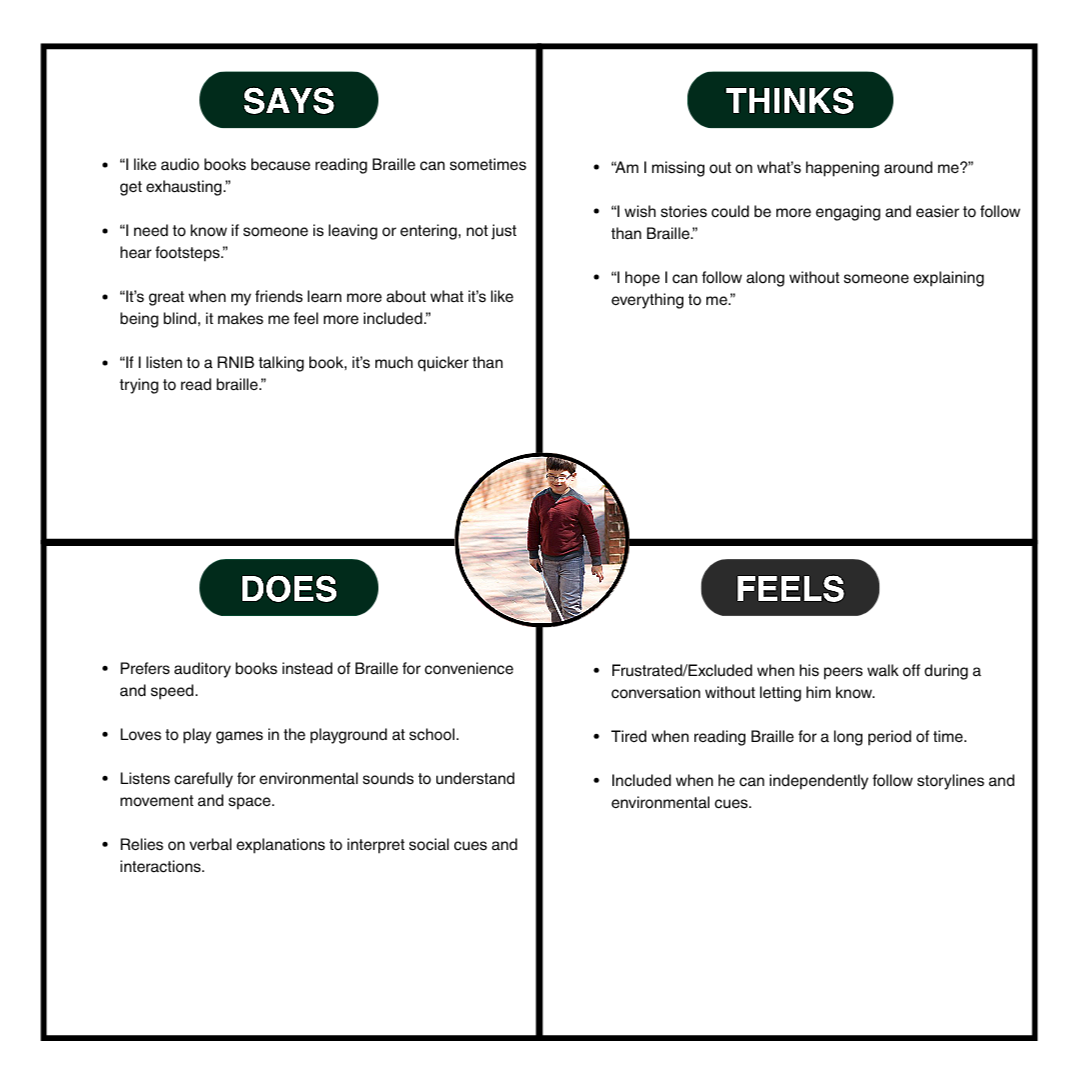
empathy maps
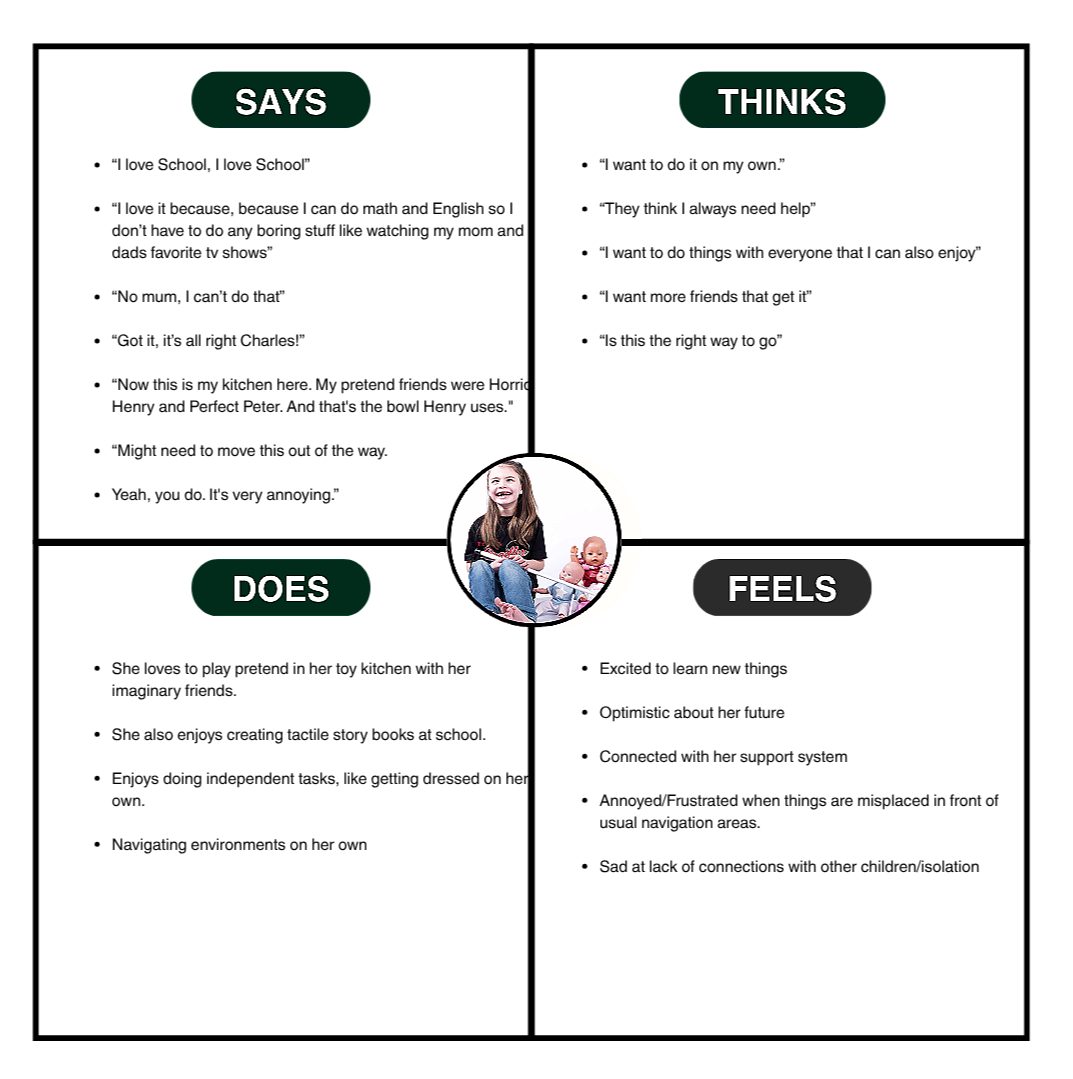
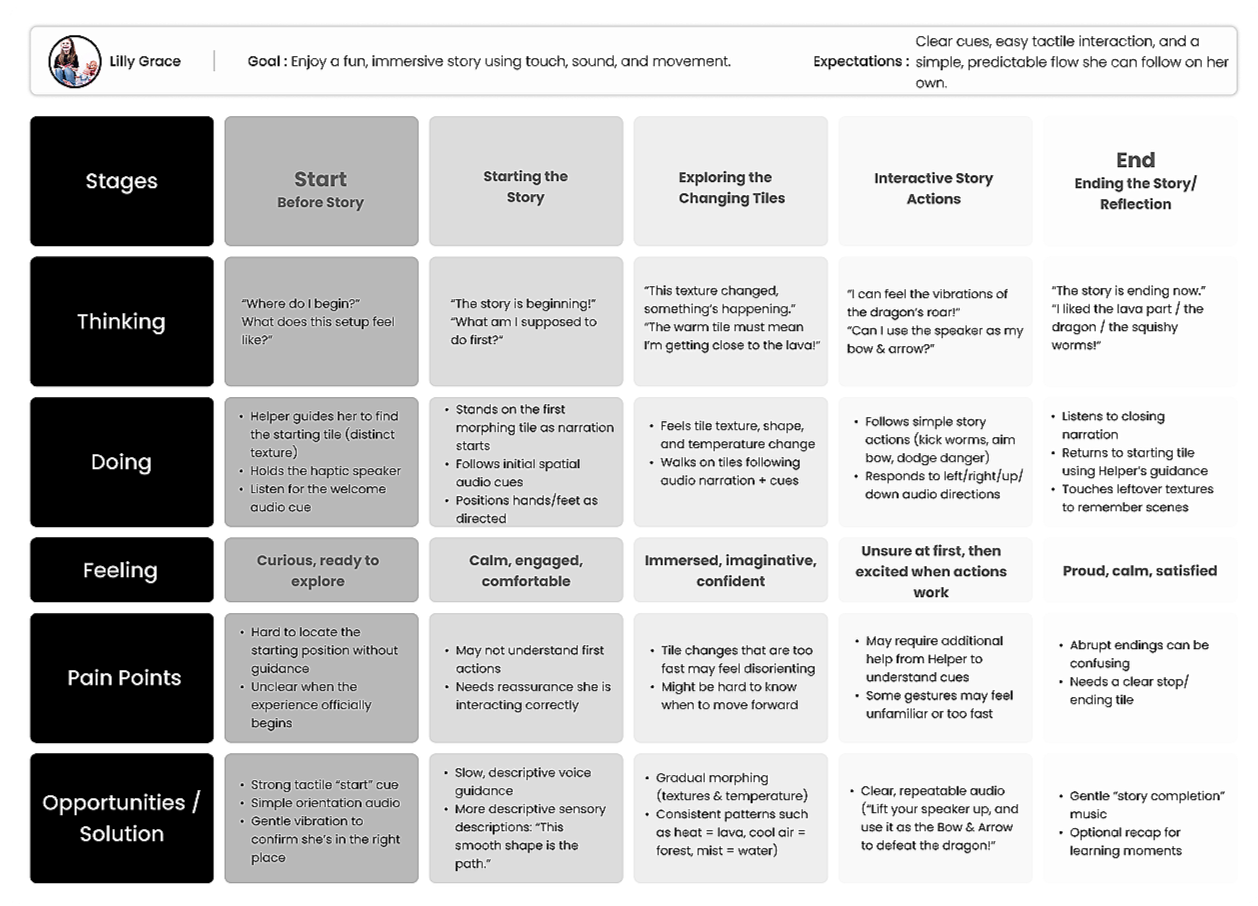
journey maps
Impact & Outcomes
Emotional & Educational Impact
For Blind Children
The prototype transformed inaccessible story elements into tangible, memorable sensory experiences. Children could “feel” narrative moments—heat from the volcano, the squish of worms, the crunch of leaves—creating an emotional connection that traditional storytelling can’t provide.
For Sighted Children
The experience fostered empathy and understanding of tactile-first storytelling by immersing them in a world where sound and touch carry meaning.
For Teachers & Caregivers:
The prototype demonstrated how multi-sensory tools can support learning, spatial development, and emotional expression in children who are blind. Teachers saw firsthand how sensory design can create inclusive group experiences.
Overall, the project broadened how stories can be told and who can meaningfully participate in them—showing measurable improvements in engagement, clarity, and emotional resonance.
Reflection & Next Steps
What We Learned
Through multiple rounds of testing, we learned how critical distinct, memorable sensory cues are for children who are blind or low-vision. Our reflection emphasized that typical tactile experiences often get lost in “noise,” making it essential to create textures that are intentionally exaggerated, unique, and easily differentiable. We also discovered how tightly story clarity and sensory detail need to be aligned—when audio cues, textures, temperature shifts, and movement prompts worked together, children followed the narrative more confidently and engaged more deeply.
We also learned that emotional resonance doesn’t just come from the story—it comes from how the child can physically interact with it. User responses showed us that when sensory cues were strong and meaningful, children were more expressive, playful, and confident.
What Still Needs Improvement
Testing highlighted several areas that need refinement:
Instruction Clarity Some actions, such as “move the worms aside” or the bow-and-arrow scene, need clearer cues or gestures to support independent execution.
Navigation & Path Guidance Some children stepped off the tiles, showing the need for improved spatial boundaries for guidance.